Why it’s important to portray imperfect characters and distance the diaspora from the “model minority”
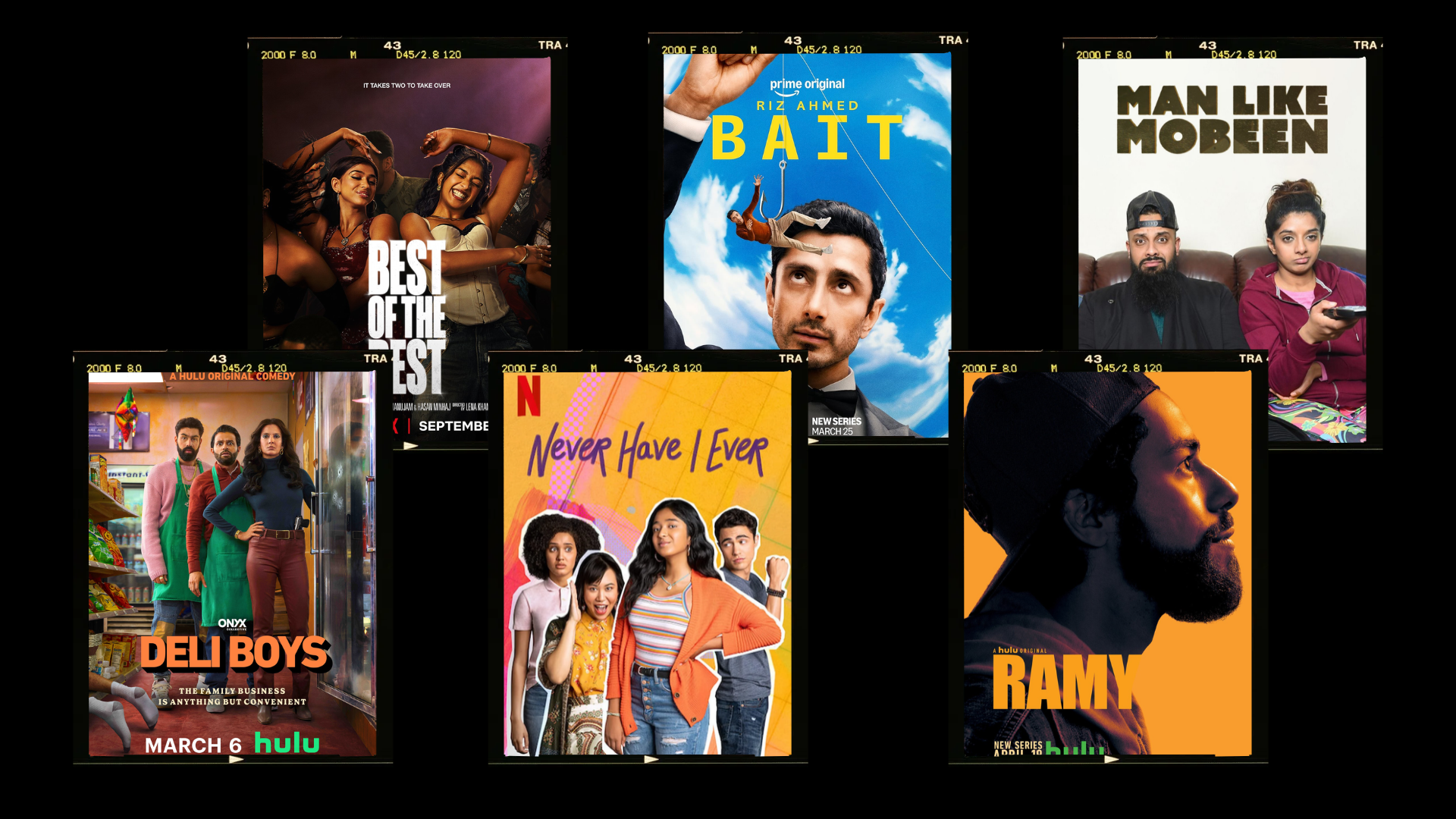
A 98% critics’ score on Rotten Tomatoes, nominations from Gotham TV and Film Independent Spirit Awards, and a star-studded cast, but somehow, Deli Boys didn’t build a big enough audience to get a season three renewal. Deadline noted that even in 2026, having a South Asian creator and three South Asian leads was rare in Hollywood. Upon Deli Boys’ cancellation, creator Abdullah Saeed thanked the Muslim and Pakistani immigrant communities who saw themselves in it. And while the community continued to debate whether the characters were “good representation,” the show disappeared.
Muslim and South Asian representation in Hollywood is still so scarce that each new movie or show gets judged as if it has to speak for the entire diaspora. That demand itself is a version of the model minority myth. Our community’s instinct to hide our “dirty laundry” pushes creators toward flawless characters – as if flawed characters aren’t the real story. We should be celebrating the imperfect, specific stories, even the ones we don’t personally relate to. Because the alternative isn’t perfect representation. The alternative is no representation, or going back to being cast as terrorists, taxi drivers, or any number of stereotypes written by white writers.
The Stakes
A 2021 USC Annenberg study, Missing & Maligned, found that of 200 top-grossing films studied, only 19 (9.5%) had at least one Muslim character on screen. Of the Muslims portrayed, 41% of both primary and secondary characters were involved with violence – either targets or perpetrators of violence – 19% even dying by the end of the film. Furthermore, even though Muslims are the most racially and ethnically diverse religious group in the world, they are consistently racially profiled in film: portrayed as Middle Eastern/North African two-thirds of the time. What’s even more problematic is that more than half of the main Muslim characters were immigrants, migrants, or refugees, so Muslims were consistently depicted as “foreign”. Oscar and Emmy award winning actor Riz Ahmed, who supported the study, explained the larger impact of creating such biased views of a community: “the representation of Muslims on screen feeds the policies that get enacted, the people that get killed, the countries that get invaded.” When the baseline for Muslim representation has been set so low, flawed but human characters like those in Deli Boys are progress, not a failure.
The Scarcity Trap
One of the core problems for the diaspora is the fact that there are so few stories currently out there. Thus, each one is expected to represent everyone. Tufts Daily writer Raga Chilakamarri put it well: “there’s plenty of crappy television focused on white American teens, such that I can criticize one without criticizing all”. However, that privilege is not shared by South Asians or Muslims. We’re so hungry for representation that any new piece of content “has to fulfill the expectations of an entire demographic” and that’s simply unfair. Creators themselves have pushed back on this burden. Responding to criticism of Never Have I Ever, the show’s lead Maitreyi Ramakrishnan tweeted “Devi does not represent the entirety of the South Asian community”. Similarly, actor and comedian Ramy Youssef received so much backlash for portraying his own life experience in his 2019 series Ramy, that he felt the need to clarify that he wasn’t trying to represent all Muslims or all Arabs, only one character and his own dysfunctional Arab American family (The New Arab). Both Devi and Ramy were based on Mindy Kaling and Ramy Youssef’s own experiences – made explicitly clear by the creators – yet some audiences were still unable to accept a flawed character having a human experience based on someone’s reality.
The problem is that artists aren’t being critiqued on their craft – writing, pace, characters – which would be fair and healthy criticism; but instead are facing purity testing from entire institutions, not just audiences. In 2020, the Middle East Eye put out what can only be described as a hit piece about Ramy and how it had “failed Arab Americans”, critiquing the show’s treatment of sex and alcohol as sinful without an explanation of why. The article expected a comedy about one man’s spiritual struggle to include a theology lesson, when that was far from the aim of the show. In fact, Youssef himself has said that this conflict is exactly what he’d never seen on TV, the “gradations and levels” of being a Muslim, struggling with faith and identity just like anyone else (LA Times). The Middle East Eye article chides that “the series acts like an American mainstream show that dares not delve into theology”. Ramy is categorized as a sitcom; while it is not typically the subject matter of a situational comedy to “delve into theology”, there is also nothing inherently wrong about being mainstream. In fact, one could argue that an Arab-American led sitcom becoming mainstream and winning Golden Globe and Peabody Awards should be celebrated, not knocked down by its own people.
Imperfect Characters Are the Point
As South Asians or Muslims, we’ve spent so long yearning for representation only to be given the same types of roles, either the terrorists or the obedient model minority stereotype. We’ve finally gotten to a point where we get to tell our own stories, and imperfect characters are the point.
They show inner struggle without apologizing for it.
Ramy was very open about his spiritual journey: “I feel I have this hole inside of me [...] And I’m always trying to fill it up with something, like sex and porn.[...] And I tried to fill it with God, but I just don’t know how.” This kind of spiritual honesty is almost never shown in Muslim characters: the desire to get closer to God but not knowing how, and the inability to really talk about it with those around you. This type of vulnerability should be celebrated, not shut down, because it’s reflective of so many young people’s experiences in the diaspora. Shah Latif’s inner struggle with faith, stardom, and responsibility in Bait was met with similar criticism, in part because Ahmed’s metaphoric tool to represent his inner dialogue was a pig’s head. While the questions surrounding identity, a place at the table, and fame discussed in the Prime Video series are universally relatable, a large part of the target audience felt their patience was “strained” by the use of the pig’s head (the Guardian).
They show culture without translating it for outsiders.
Deli Boys, Bait, Man Like Mobeen: these shows are full of Urdu words and cultural references naturally sprinkled throughout, without explanation. Using words and phrases like “gadhe”, “my gaajar ka halwa”, “dafa ho jao”, “banda” helps the comedy land closer to home for the South Asian audiences these shows were made for. But it’s more than just use of language; the importance of these shows lies in the fact that they don’t exist to explain or justify culture, the culture simply exists. Deli Boys makes the reference “what in the RRR is this bullshit”, the “Ramadan Muslim” trope is mentioned in both Ramy and Bait without further explanation, and in Best of the Best Maya’s claim that a wedding themed dance is “super predictable” and “something a white person would think is a good idea” can be easily understood by the intended audiences and make the messaging more meaningful to those in the know. Use of culturally specific dialogue and references reflects a level of trust in audiences, one that comes from a place of respect that unfortunately isn’t being reciprocated.
They make flawed characters lovable.
South Asians and Muslims face a constant pressure towards perfection. Flawed characters depict that imperfection is okay, real, and deserving of love. Guz Khan’s Man Like Mobeen portrays a protagonist who was a former drug dealer raising his teenage sister in Birmingham, with his criminal past and Pakistani Muslim identity both equally complicating his life. Deli Boys showcased drug deals being carried out in shalwar kameez with Urdu profanity while the characters struggled with the very real fear of how to be good sons. As Deli Boys’ star Asif Ali puts it “we’ve never been afforded the opportunity of being human beings with flaws and conflicted thoughts”, an injustice to diaspora audiences and actors. We are not all likeable, and we should be able to see our struggles represented on screen. Devi, the lead character from Netflix’s Never Have I Ever, was met with immense criticism for her “messiness” despite being a fairly real comedic depiction of a 15-year-old girl suddenly having lost her father. In an NPR interview, Maitreyi Ramakrishnan defended her character, saying that Devi might be a lot at times, but even if you’re not a young brown woman, you can still relate to her emotions, insecurities, and uncertainties.
The Model Minority Problem
The model minority stereotype is a generalized cultural belief that characterizes Asian Americans as uniformly wealthy, highly educated, and successful through hard work and quiet assimilation. Put simply, it erases diversity, minimizes systemic racism, and increases mental health pressures (Pew Research). The “wealthy, successful Asian” story was not one created by or beneficial for our community to begin with. For Muslim characters, we face the same trap in the “good Muslim” test. Ramy Youssef joked that people act as if Muslims wake up every morning choosing between “ISIS or breakfast”, as though being a moderate, non-extremist Muslim were a daily decision (Gulf News). There’s no need for our community to constantly have to justify that we’re “one of the good ones”; when we demand only pious, respectable characters, we’re accepting the framing that only morally good, perfect characters are allowed and accepted.
South Asians may also recognize the cultural root of this issue in a phrase we often hear: “log kya kahenge” (“what will people say?”). A British Psychological Society piece describes it as a social script that puts family honor above individual truth and appearance above authenticity. Using the threat of “log kya kahenge” or not airing dirty laundry can delay people from seeking help and make struggles seem smaller than they are. We see these challenges play out in Best of the Best when protagonist Anjali (Priyanka Kedia) is threatened by her mother with losing tuition support if the dance team impacts her grades, creating tension between art and academics. On the other hand, Maya (Maitreyi Ramakrishnan) challenges the model minority by being academically gifted but being “difficult” and a threat to authority. Demanding perfect characters – when messy characters are much closer to reality – is the media version of “log kya kahenge”. Hiding our dirty laundry doesn’t protect us, it rebuilds the model minority story to cage us better.
What Supporting Representation Actually Looks Like
As a Bangladeshi Muslim American, I have yet to see an exact version of myself on screen, but that doesn’t mean I haven’t felt represented and excited by shows and movies in recent years. Whether it’s Deli Boys, Never Have I Ever, Bait, Man Like Mobeen, Best of the Best, Ms. Marvel, or Ramy, Muslim and South Asian representation in Hollywood has come a long way now that we get to tell our own stories, and this is something that should be celebrated even if we can’t relate to every part of them. This type of media is kept alive by attention, our attention. We need to watch them, stream them early, and share them.
Criticism in good faith is important, but it should come from someone invested in the work, not a gatekeeper deciding what counts as “real” representation. It’s imperative that we remember one piece of media cannot and should not represent everyone. It just isn’t possible. Every show that gets made creates room for the next one, and “there are still many stories waiting to be told” (Maitreyi Ramakrishnan)– that includes the sitcom starring the Bangladeshi astrophysicist that I’m still waiting for.
Citations
Ali, L. (2019, April 19). Ramy steps in the Muslim dating pool. Los Angeles Times. https://www.latimes.com/entertainment/tv/la-et-st-ramy-youssef-hulu-muslim-comedy-20190419-story.html
Camacho, M. (2018). Man Like Mobeen TV review [Review of the TV series Man Like Mobeen]. Common Sense Media. https://www.commonsensemedia.org/tv-reviews/man-like-mobeen
Chilakamarri, R. (2021, November 30). On Demand: Never Have I Ever been the star of an American teen dramedy. The Tufts Daily. https://www.tuftsdaily.com/article/2021/11/on-demand-never-have-i-ever-been-the-star-of-an-american-teen-dramedy
Cordero, R. (2026, August 14). Deli Boys canceled after two seasons at Hulu. Deadline. https://deadline.com/2026/08/deli-boys-canceled-hulu-1237040657/
Deb, S. (2019, November 2). Ramy is a quietly revolutionary comedy. Gulf News. https://gulfnews.com/amp/story/entertainment%2Ftv%2Framy-is-a-quietly-revolutionary-comedy-1.67561460
Fahim, J. (2020, July 20). The trouble with Ramy: How the award-winning TV show has failed Arab Americans. Middle East Eye. https://www.middleeasteye.net/discover/ramy-hulu-show-arab-americans-how-failed
Jones, E. (2026, March 25). Bait review [Full headline] [Review of the TV series Bait]. The Guardian. https://www.theguardian.com/tv-and-radio/2026/mar/25/bait-review-riz-ahmed-bond-comedy-prime-video
Khalid, A. (Host). (2023). Never Have I Ever star Ramakrishnan says anyone can relate to Devi’s growth [Radio broadcast transcript]. NPR. https://www.npr.org/transcripts/1180963919
Khan, A.-B., Pieper, K., Smith, S. L., Choueiti, M., Yao, K., & Tofan, A. (2021). Missing & maligned: The reality of Muslims in popular global movies. USC Annenberg Inclusion Initiative. https://assets.uscannenberg.org/docs/aii-muslim-rep-global-film-2021-06-09.pdf
Liu, L. (2022, September 29). Never Have I Ever: A high school story [Review of the TV series Never Have I Ever]. [The Gamut]. https://oagamut.com/715/ae/never-have-i-ever-a-high-school-story/
McVety, M. (2026, August 17). Hulu cancels Deli Boys after two seasons due to ratings concerns. PhillyVoice. https://www.phillyvoice.com/deli-boys-cancelled-ratings-hulu/
Plant, M. (2019, May 28). Ramy: Why this Muslim-American sensation doesn’t care about Trump. The New Arab. https://www.newarab.com/features/ramy-why-muslim-american-sensation-doesnt-care-about-trump
Ruiz, N. G., Im, C., & Tian, Z. (2023, November 30). Asian Americans and the “model minority” stereotype. Pew Research Center. https://www.pewresearch.org/race-and-ethnicity/2023/11/30/asian-americans-and-the-model-minority-stereotype/
Sharma, I. (2025, March 23). “We were unhinged”: The stars of Deli Boys on playing the show’s lovable screw-ups. Rolling Stone. https://www.rollingstone.com/tv-movies/tv-movie-features/deli-boys-stars-interview-1235298796/
Tayib, M. (2025, September 3). “Log kya kahenge?” – Unlearning silence and shame. The Psychologist. https://www.bps.org.uk/psychologist/log-kya-kahenge-unlearning-silence-and-shame
USC Annenberg School for Communication and Journalism. (2021, June 10). New study from Annenberg Inclusion Initiative reveals erasure and demeaning portrayals of Muslim characters across 200 top films. https://annenberg.usc.edu/news/research-and-impact/new-study-annenberg-inclusion-initiative-reveals-erasure-and-demeaning
Further Reading
Bhatti, U. (2026, March 26). Bait review: TV’s new James Bond is hilariously insecure Muslim actor Riz Ahmed. The Daily Beast. https://www.thedailybeast.com/obsessed/bait-review-tvs-new-james-bond-is-hilariously-insecure-muslim-actor-riz-ahmed/
Blackburn, S.-S. (2019, March 21). What is the model minority myth? Southern Poverty Law Center. https://www.splcenter.org/resources/stories/what-is-the-model-minority-myth/
Gajjar, S. (2026, September 17). Best of the Best review: Dance drama is one of Netflix’s best [Review of the film Best of the Best, by L. Khan, Dir.]. The A.V. Club. https://www.avclub.com/best-of-the-best-review-netflix-maitreyi-ramakrishnan-priyanka-kedia-lena-khan
Gajjar, S. (2026, March 24). Riz Ahmed’s Bait is a rousing, genre-bending comedy [Review of the TV series Bait]. The A.V. Club. https://www.avclub.com/bait-review-tv-prime-video-riz-ahmed
Ho, R. (2026, April 9). Riz Ahmed as 007, bruv? That’s Bait [Review of the TV series Bait]. The Asian Cut. https://theasiancut.com/review/tv-review-bait-riz-ahmed/
Ilott, S. (2018, January 31). Man Like Mobeen: BBC comedy defies Muslim stereotypes. Manchester Metropolitan University. https://www2.mmu.ac.uk/news-and-events/news/story/7103
Jackson, A. (2021, June 10). Riz Ahmed, Pillars Fund, USC Annenberg & Ford Foundation unveil the Blueprint for Muslim Inclusion (exclusive). Variety. https://variety.com/2021/film/news/riz-ahmed-muslim-study-usc-annenberg-inclusion-initiative-pillars-fund-1234993247/
Karim, A. (2026, September 20). Netflix’s Best of the Best brings a niche world into the spotlight. Forbes. https://www.forbes.com/sites/anharkarim/2026/09/20/netflixs-best-of-the-best-brings-a-niche-world-into-the-spotlight/
McCurdy, A. L. (2023). Examination of the “model minority” stereotype through ethnicity and sexual orientation heterogeneity among Asian American youth. Journal of Adolescence, 95(6), 1258–1273. https://doi.org/10.1002/jad.12200
Nielsen. (2021). Closing the gap for South Asian representation on screen. https://www.nielsen.com/insights/2021/closing-the-gap-for-south-asian-representation-on-screen/
Pew Research Center. (2025, May 1). Bangladeshis in the U.S. [Fact sheet]. https://www.pewresearch.org/social-trends/fact-sheet/asian-americans-bangladeshis-in-the-u-s/
Pfeiffer, S. (2019, April 21). Ramy is about one millennial American Muslim — and everyone’s racist uncles. NPR. https://www.npr.org/2019/04/21/715290814/ramy-is-about-one-millennial-american-muslim-and-everyone-s-racist-uncles
Porter, R. (2026, August 14). Deli Boys canceled after two seasons on Hulu. The Hollywood Reporter. https://www.hollywoodreporter.com/tv/tv-news/deli-boys-canceled-hulu-2-seasons-1236673950/
Robb, D. (2021, June 10). Muslims underrepresented and stereotyped in top-grossing films, USC Annenberg report finds. Deadline. https://deadline.com/2021/06/muslims-hollywood-movies-study-stereotyped-underrepresented-1234772495/
