What the data shows versus where current front runners fall
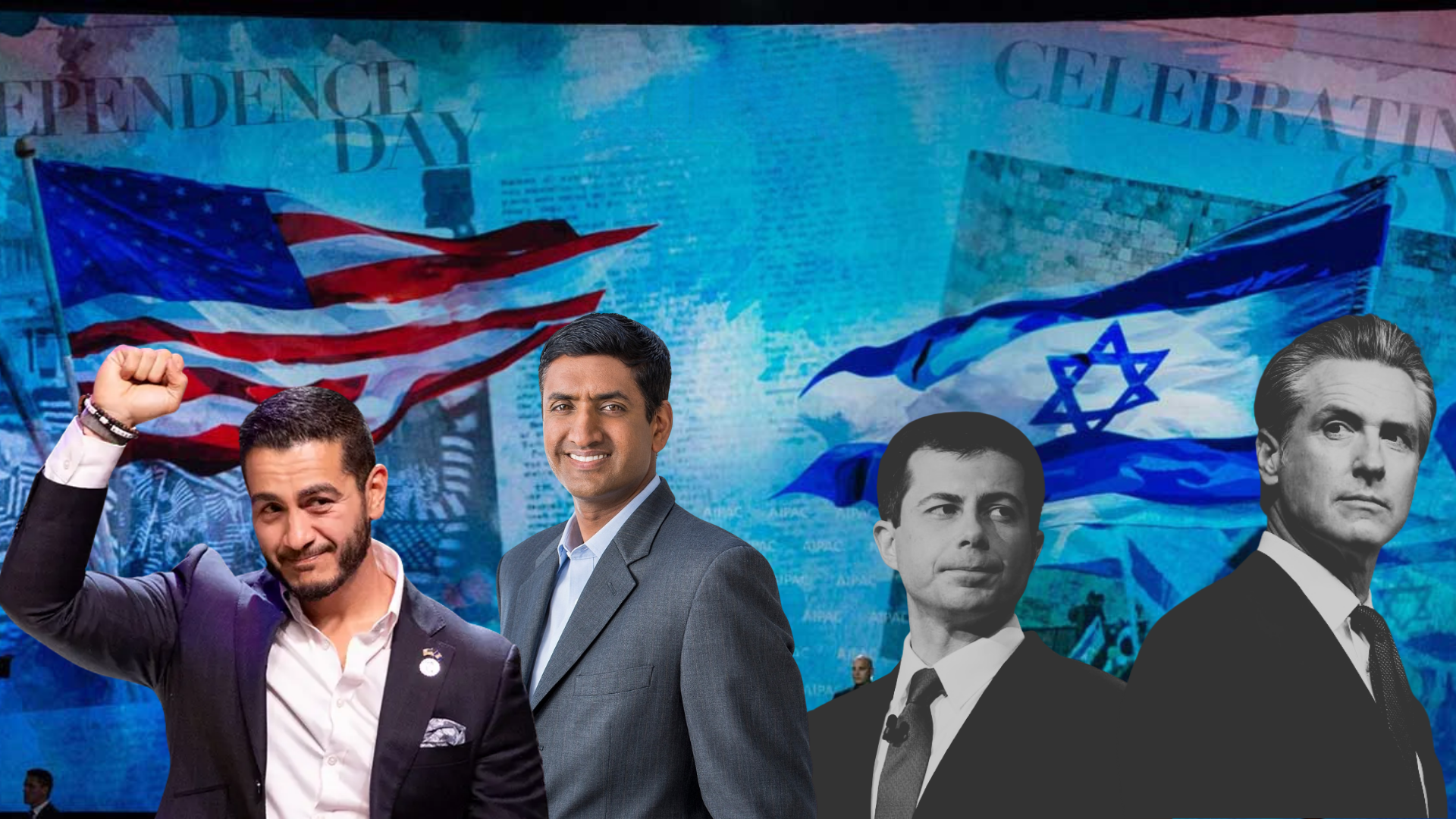
As we approach the heated 2026 Midterm Elections, the question seemingly already on everyone’s mind is what does this mean for 2028? Affordability has dominated voter concerns, but is Israel/Gaza becoming the thing candidates can’t say the wrong thing about and still win a Democratic primary? Or is it still a manageable liability for those who play it carefully enough? Perhaps the 2028 nominee doesn’t need to be “anti-Israel” to win, but the data suggests they can no longer afford to be reflexively pro-Israel in the old AIPAC-conference sense. The candidates best positioned right now are the ones who have avoided taking a hard position in either direction.
There is mixed messaging as to whether Democrats or Republicans actually care about what the general public or a supposed “working class” wants from their government. Otherwise, they would respond to the 29% of voters who say they want congressional candidates to talk about the economy – an overwhelming majority compared to the 9% for government ethics & reform and 4% for foreign policy (Pew Research Center, 2026). Gallup polls show that 80% of the electorate are concerned about the integrity of their elected officials, 78% about anonymous political donations, and 67% about the integrity of elections themselves. There’s more than enough data to show where the focus should lie: people want ethical leaders who will work to make their lives affordable. However, both sides of the aisle are currently too busy condemning a streamer for “antisemitic statements” they can’t even quote. What, then, will be the focus of our leaders by the time we reach 2028?
Historically, the economy has decided essentially every presidential election in U.S. history. However, messaging from the Democratic establishment-backed candidates during the 2026 primary cycle has relied heavily on anti-opponent “boogeyman” framing, instead of policy-first campaigning. This, along with the increasing voter opposition to the Israel lobby/corporate PACs in campaigns, has left establishment candidates in a tough spot as they consider their presidential bids for 2028. Never before has American foreign policy been so intertwined with the economy. While previous elections could be swayed by “the economy, stupid” (Clinton, 1992), now electorates are asking the question “why are our tax dollars being spent abroad?”
In 2026, American sympathies have flipped – for the first time – in favor of Palestinians over Israelis. While 54% of Americans were more sympathetic towards Israelis in 2023, that number has dropped to 36% in 2026 (Gallup, 2026). On the flip side, sympathies with Palestinians have risen from 31% to 41% in the past three years. In fact, the difference is even greater for the newest voters: 18-34 year-olds. The same Gallup poll shows 53% of this age group now sympathize more with Palestinians compared to a record low of 23% who sympathize more with Israelis. The youth voter turnout in the past three presidential elections has never crossed 50%, with 39% in 2016, 50% in 2020, and back down to 47% in 2024. It’s clear that neither party has quite spoken to the youth yet.
Looking ahead to 2028, both parties also have to win back the Muslim and Arab votes. ISPU’s 7th American Muslim Poll documents how the party’s handling of Gaza directly cost Democrats votes in 2024 – “many Muslims withheld their votes from President Biden and later nominee Vice President Harris in protest” (ISPU, 2025). The “protest vote” dynamic was not a one-off. It’s a measurable, continuing trend in how a specific bloc of Democratic-aligned voters are responding to the party’s Israel policy. Michigan’s Arab population makes up 4% of its electorate – and was ignored by Kamala Harris in 2024 – costing her the election. In fact, British journalist and political commentator Sami Hamdi went across the U.S. during the 2024 election cycle telling Muslim voters they need to punish the Democrats for their complicity in the Gaza genocide. While Hamdi has acknowledged that Trump is by no means a good president, his reasoning was that pre 2024, AIPAC had won 100% of elections, and in challenging the Democrats in 24, the long term impact will be a “an existential crisis for our [the Zionist lobby’s] lobbying power” (Jalal, 2024) and reduction in AIPAC/Israel’s power over U.S. politics. Thus, the next candidate will have to be anti-Israel.
Hamdi’s predictions may have been correct. IMEU Policy Project and YouGov surveyed Democratic Primary voters across six early states, including Michigan. 46-65% by state say reducing support for Israel will be a factor in their 2028 vote and large majorities favor an arms embargo (IMEU Policy Project 2026). The data supports a real and fast-moving shift away from supporting Israel, concentrated among younger and Democratic-leaning voters. In Michigan specifically, 68% of respondents supported a US sanction on Israel and 75% would prefer a candidate who will cut off weapons to Israel. However, the question still remains: will the candidates listen to their electorate?
The 2026 primaries showed a “muddled verdict” in terms of how Democratic voters respond to politicians’ positions on the issues (Middle East Eye, 2026). In Michigan, Abdul El-Sayed defeated AIPAC-favored Haley Stevens despite the $70 million PAC money, but Missouri saw a win for AIPAC-backed Wesley Bell against Cori Bush, one of Congress’s most outspoken Israel critics. Clearly, AIPAC’s money doesn’t guarantee wins, but it doesn’t reliably lose either. However, the Massachusetts senate primary saw a victory for 80-year-old anti-Israel incumbent Ed Markey by a wide margin against AIPAC-backed Seth Moulton. Even AIPAC’s $100,000+ weren’t enough to trump the appeal of Markey’s progressive agenda for the Massachusetts electorate.
So what does that mean for the 2028 Presidential bids? In early polling, neither 2028 frontrunner – currently Gavin Newsom and Pete Buttigieg – has taken a hard position that AIPAC would need to “fight”. While Newsom has renounced AIPAC money outright and has questioned weapons aid to Israel, Buttigieg has stayed conspicuously silent on the AIPAC-money question. By never becoming a named target of AIPAC’s spending, both candidates avoid being forced to answer the hard policy questions while maintaining their own brands: Buttigieg on “affordability, healthcare, and corruption”, Newsom’s anti-Trump brand. While both candidates have been able to avoid making Israel their boogeyman thus far, this ambiguity might not last much longer.
2026 data has shown that an “unconditional AIPAC-conference Democrat” is now an electoral liability, not an asset, for anyone seeking the national Democratic nomination, as evidenced by the wholesale renunciation of AIPAC money by nearly the entire 2028 field – something that would have been unthinkable a decade earlier. Will the winning position be Newsom and Buttigieg’s strategic ambiguity? Surely that won’t hold up on the debate stage? AIPAC’s primary spending pattern could shift in the next two years, and a Gaza ceasefire or escalation between now and 2028 could change salience dramatically.
While there are those who will run in 2028 for whom Israel comes to them “in their dreams”, others will try to be unclaimed by AIPAC and remain untested by the pro-Palestinian primary electorate – lingering vague enough, or simply not senior/visible enough on foreign policy that neither the pro-Israel Institution nor the anti-AIPAC watchdogs have had reason to force the question yet. Unlike previous elections, if the data shows us anything, it’s that Israel will be the defining issue of the 2028 race.
References
CIRCLE (Center for Information and Research on Civic Learning and Engagement). (2025, April 14). New data: Nearly half of youth voted in 2024. Tufts University. https://circle.tufts.edu/latest-research/new-data-nearly-half-youth-voted-2024
Gallup. (2026, February). Israelis no longer ahead in Americans’ Middle East sympathies. https://news.gallup.com/poll/702440/israelis-no-longer-ahead-americans-middle-east-sympathies.aspx
Gallup. (2026, July 29). Election concerns run high ahead of 2026 midterms. https://news.gallup.com/poll/712955/election-concerns-run-high-ahead-2026-midterms.aspx
Gallup. (2026, July). Most important problem. https://news.gallup.com/poll/1675/most-important-problem.aspx
The Guardian. (2026, August 29). Democrats ignored the uncommitted movement for Gaza in 2024. Now, it’s winning elections. https://www.theguardian.com/us-news/2026/aug/29/democrats-uncommitted-movement-midterms
IMEU Policy Project. (2026, August 24). 2028 starts here [Poll]. https://www.imeupolicyproject.org/polls/2028-starts-here
Institute for Social Policy and Understanding. (2025). American Muslim poll 2025. https://ispu.org/poll/american-muslim-poll-2025/
Jalal, M. (Host). (2024, September 28). Why US Muslims are abandoning Harris with Sami Hamdi (Ep. 168) [Audio podcast episode]. In The Thinking Muslim. https://www.thinkingmuslim.com/podcast/samihamdi-elections
Jewish Telegraphic Agency. (2026, September 1). Markey projected to win Massachusetts Democratic primary in a landslide. https://www.jta.org/2026/09/01/politics/markey-projected-to-win-massachusetts-democratic-primary-in-a-landslide
Middle East Eye. (2026). Michigan, Missouri Democratic primaries deliver mixed bag on Israel and Gaza. https://www.middleeasteye.net/news/michigan-missouri-democratic-primaries-deliver-mixed-bag-israel-and-gaza
Pew Research Center. (2026, July 23). As the 2026 midterms approach, economy is front and center. https://www.pewresearch.org/politics/2026/07/23/as-the-2026-midterms-approach-economy-is-front-and-center/
Pew Research Center. (2026, July 23). Midterm voting preferences by race and ethnicity, age and other demographics. https://www.pewresearch.org/politics/2026/07/23/midterm-voting-preferences-by-race-and-ethnicity-age-and-other-demographics/
Stanton, Z. (2024, October 21). The campus “uncommitted” movement has waned in Michigan. But in a battleground state with wafer-thin margins, a few holdouts could change everything. Politico Magazine. https://www.politico.com/news/magazine/2024/10/21/uncommitted-movement-michigan-college-voters-00184281
University of Pennsylvania Annenberg Public Policy Center. (2025, November 17). Youth voter turnout: Annenberg expert unpacks the issue. Annenberg School for Communication. https://www.asc.upenn.edu/news-events/news/youth-voter-turnout-annenberg-expert-unpacks-issue
Yale Youth Poll. (2026, April). Spring 2026 results. Yale University. https://youthpoll.yale.edu/spring-2026-results
